


Does linen wrinkle? Yes. But here's the thing once you understand why, you'll know how to minimise it and never panic when you see a crease again.
Just like Pamela Anderson's no-makeup look at Cannes, effortlessness can be more iconic than polished.
Linen is a completely natural fibre, and like all things in nature, it moves, grows, and ages gracefully. Wishful thinking or not, we're including ourselves in that gracefully part.
It's effortless and unbothered. Linen wouldn't show up three hours early at the airport. It's the friend sipping Aperols in the lounge, completely relaxed and charming.
Here's everything you need to know about linen clothing and wrinkles, whether you're on holidays or at home. Whether you're after perfectly polished or character.
In This Article
Does Linen Wrinkle? · Why It Wrinkles · How to Prevent It · How to Pack It · How to Remove Wrinkles · When to Wear Them · What We're Reading

Does Linen Wrinkle?
Yes. Genuinely, authentically, unapologetically yes.
But before that answer sends you spiralling, let's add some important context: wrinkling is a sign of real, quality linen. Not a defect.
Linen that doesn't wrinkle at all has almost certainly been chemically treated to resist creasing, which compromises its breathability, its longevity, and a lot of what makes it worth wearing in the first place.
There's also a meaningful distinction between linen that's been pre-washed and linen that hasn't. Raw, unwashed linen straight off the bolt tends to wrinkle more dramatically and hold those creases more stubbornly.
Pre-washed linen, like every piece in our range washed at our European atelier using Belgian and Dutch flax, arrives with its fibres already partially relaxed, which means it wrinkles more gently and recovers more easily.
And then there's the question of whether the wrinkles actually matter. For a lot of occasions, and a lot of people, they genuinely don't.
A gently creased linen dress at a beachside lunch or a morning market reads as effortlessly relaxed, not dishevelled. More on that below.
Why Does Linen Wrinkle?
The short answer is that it comes down to the fibre itself. Linen is made from flax, specifically the cellulose fibres extracted from the stalk of the flax plant.
These fibres have an unusually high degree of crystalline structure, meaning the cellulose molecules are tightly and rigidly packed together.
Flax fibres have a bending modulus two to three times higher than cotton, which is a technical way of saying they resist bending. When they do bend, they stay bent.
Cotton, by comparison, has round, crimped fibres with a natural elasticity. Bend a cotton fibre and it will more or less spring back. Bend a flax fibre and it holds the new shape.
This is why you can pull a cotton t-shirt out of a bag and give it a shake and it looks mostly fine. The same treatment on a linen shirt produces something that looks like abstract art.
Moisture plays a role too. When linen absorbs moisture, from humidity, from a wash cycle, from wearing it on a warm day, the fibres swell and become temporarily more pliable. As the fabric dries, they contract and set into whatever position they were in.
This is why linen that dries scrunched wrinkles more than linen that dries hanging freely.
It's also why a light spritz of water is such a useful tool for getting wrinkles out. You're briefly rehydrating the fibres so they can be repositioned before setting again.

How to Prevent Linen from Wrinkling (Before It Happens)
Most wrinkle problems are created in the laundry, not in the wardrobe. Get the washing and drying right, and you'll find your linen needs far less intervention afterwards.
- Wash at gentle temperatures
- Don't wring or twist
- Take it out of the washing machine right away
- Air dry while still slightly damp
Wash on a gentle cycle in lukewarm water.
Hot water causes the fibres to contract sharply, which sets wrinkles in before the garment even leaves the machine. A temperature of 30°C (86°F) is ideal for most linen.
Avoid washing linen with heavy items like denim or towels, as they create friction and pressure that can crush linen fibres mid-cycle.
Never wring or twist.
It seems obvious once you know the fibre science, but wringing linen locks creases into place.
Remove it from the machine and gently press out excess water instead. Your linen will thank you.
Remove it from the machine immediately.
Linen left sitting wet in a drum while you forget about it is linen that will wrinkle deeply and permanently.
Get it out as soon as the cycle finishes.
Air dry while still slightly damp.
This is the single most impactful habit you can build. Hang your linen on a proper hanger while it's still slightly damp, smooth it out by hand, and let the fibres relax as they dry naturally.
Over-drying, whether on a rack or in a dryer, makes linen brittle and sets creases that are genuinely hard to remove.
Our official recommendation is always to air dry, and this is why.
Hang correctly.
Dresses and tops go on a proper hanger. Linen pants and straight skirts should hang from the waistband, not folded over the bar of a hanger.
That fold becomes a permanent horizontal crease across the leg. Give pieces enough space in the wardrobe that they're not being crushed together.
For a full breakdown of washing technique, read our guide on how to wash linen.
And if you want to go deeper on prevention specifically, our guide on how to keep linen from wrinkling covers every trick worth knowing.
How to Pack Linen for Travel Without the Wrinkle Regret
Linen makes a great travel companion. It doesn't know the train schedules by heart, but it will look effortlessly good at every stop.
Linen wrinkles in your suitcase for two reasons: friction against other clothes, and sustained pressure. Get those right and it won't hold you back from starting your holiday the moment you arrive.
"The linen I pack for holidays is never the shiny new stuff. Not because I don't love shopping. But the pieces I've worn and washed a million times are completely soft, practically wrinkle-free and almost moulded to my body. Is that a thing? We'll need a scientist to do a study."
— Nadja, LUXMII

Roll, don't fold.
Folding creates sharp crease lines that set under the pressure of a packed case. Rolling distributes the bend more evenly across the fabric and significantly reduces deep wrinkle formation.
Lay the garment flat, smooth out any existing creases, then roll tightly from the hem up. It also saves space, which is a bonus.
Use packing cubes.
Not just for organisation. They keep linen pieces from shifting and rubbing against other fabrics during transit.
Dedicate one cube to linen specifically so it's not pressed against heavier items.
Line with tissue paper.
Place tissue paper between layers and inside folds where possible.
It reduces friction and pressure, the same principle as the tissue paper that comes wrapped around delicate purchases.
Think about placement in the case.
Linen should not be at the bottom of a packed suitcase under everything else. If you're travelling carry-on, linen on top is ideal.
If you're checking a bag, and checked bags do get flipped and thrown, pack linen in the middle with soft items like knitwear as a buffer on both sides.
Do not overpack.
A suitcase you have to sit on to close is a wrinkle machine. Pressure is what sets creases permanently.
If the case is too full, the linen is too compressed. Pack less, or go up a bag size.
Unpack immediately on arrival.
The longer linen stays compressed, the more the creases set. The first thing you do when you get to your room is hang your linen. Not later.
If you're travelling with a maxi dress or a longer piece, a garment bag is worth the small amount of extra luggage space.
It allows the piece to hang rather than fold, which is always going to produce better results.
How to Get Wrinkles Out of Linen (The Methods That Actually Work)
You packed well, you unpacked promptly, and there are still creases. Here are the four methods genuinely worth knowing about.
- Steamer
- Spritz with water (and wait to dry)
- Iron while damp
A hand steamer.
This is the most effective tool for linen, and if you travel with linen regularly, it is worth buying a compact travel steamer.
Hold it a few inches from the fabric, move slowly from top to bottom, and gently pull the fabric taut as you go. Let the piece hang for a minute after steaming to cool and set.
Steamers work with linen's moisture-responsive nature rather than against it. They rehydrate the fibres briefly so they can be repositioned.
The spritz and smooth.
Mist the garment lightly with water, a small spray bottle is a useful addition to any travel bag, smooth the fabric with your hands, and hang to air dry.
For light to moderate creases, this is often all you need. The fibres rehydrate, become briefly pliable, and reset in a smoother position as they dry.
Iron while damp.
If you have access to an iron, this remains the most thorough method for a really crisp result.
Iron on the wrong side of the fabric for dark colours to avoid shine. A pressing cloth over any embellishments. Medium heat, not scorching.
Our full technique guide is here: how to iron linen.
The damp towel in the dryer.
If you have access to a dryer, many Airbnbs and hotels do, toss the linen piece in with a clean damp towel on low heat for ten minutes. The towel creates steam that relaxes the fibres.
The critical step: remove the garment immediately when the cycle ends and hang it straight away. Leaving it to sit in the dryer defeats the purpose entirely.

When Wrinkles Work (and When They Don't)
Here's the thing about linen wrinkles: they're not all created equal. Some are effortlessly chic. While some look like you've slept in the linen.
Knowing the difference is what's important. So linen stops being the fabric you stress about and becomes the one you can't travel without.
Wrinkles work well on:
- Wide-leg and palazzo styles
- Darker colours (navy, black, espresso, antique moss)
- Bohemian and softly draped styles
- Relaxed, easy fits with generous proportions
Reach for the steamer for:
- Structured and tailored pieces
- Button-down shirts worn in polished contexts
- Anything with deep creasing around the bust or shoulders
Wear the Wrinkles
Wide-leg and palazzo styles.
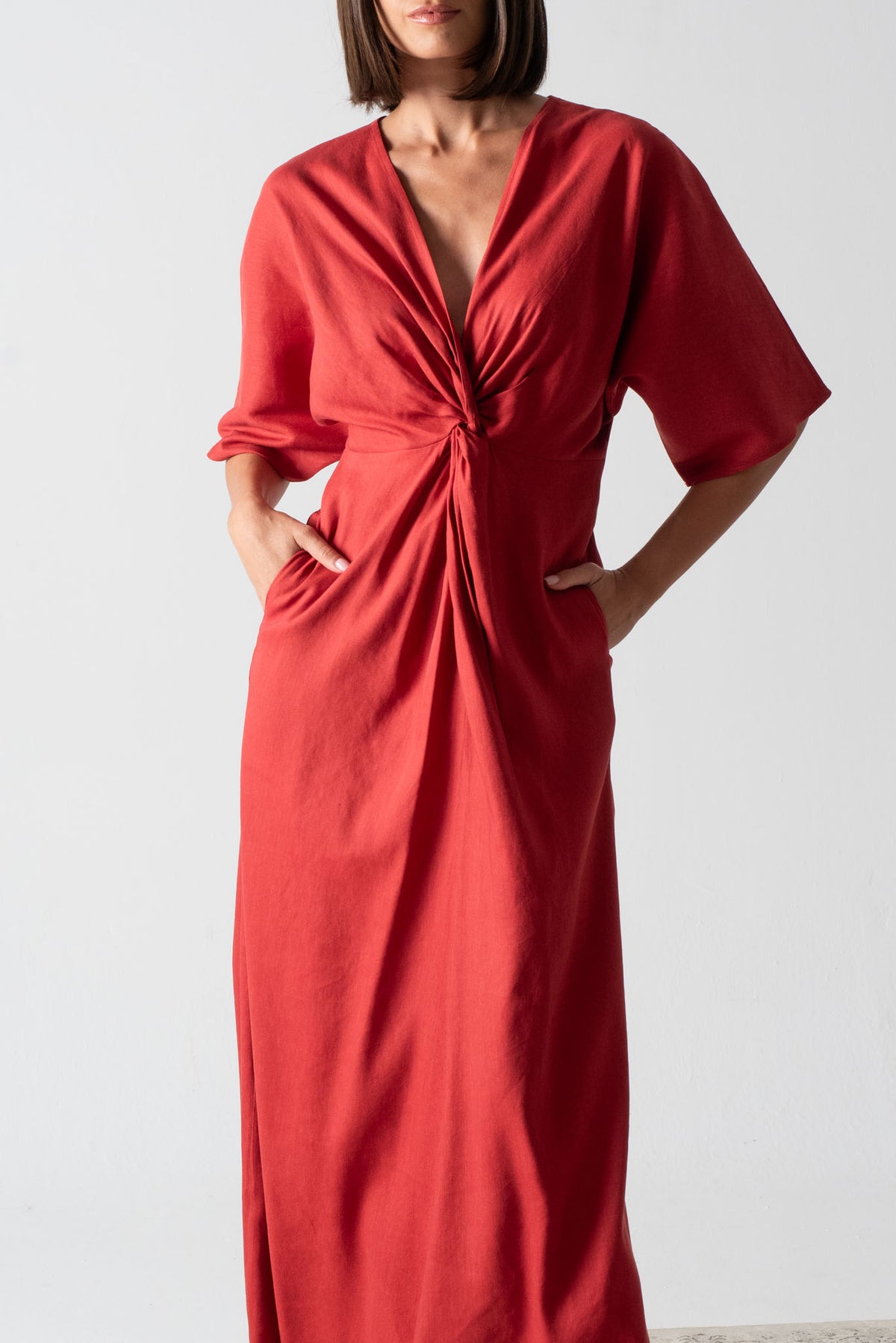
The billowing, high-volume silhouette of a palazzo pant means any creasing gets lost in the drape. Our Bruno Palazzo Pant is a case in point.
The wide leg moves with you in a way that makes the fabric look intentionally relaxed at every angle. Wrinkles aren't visible so much as absorbed into the overall flow of the garment.
Darker colours.
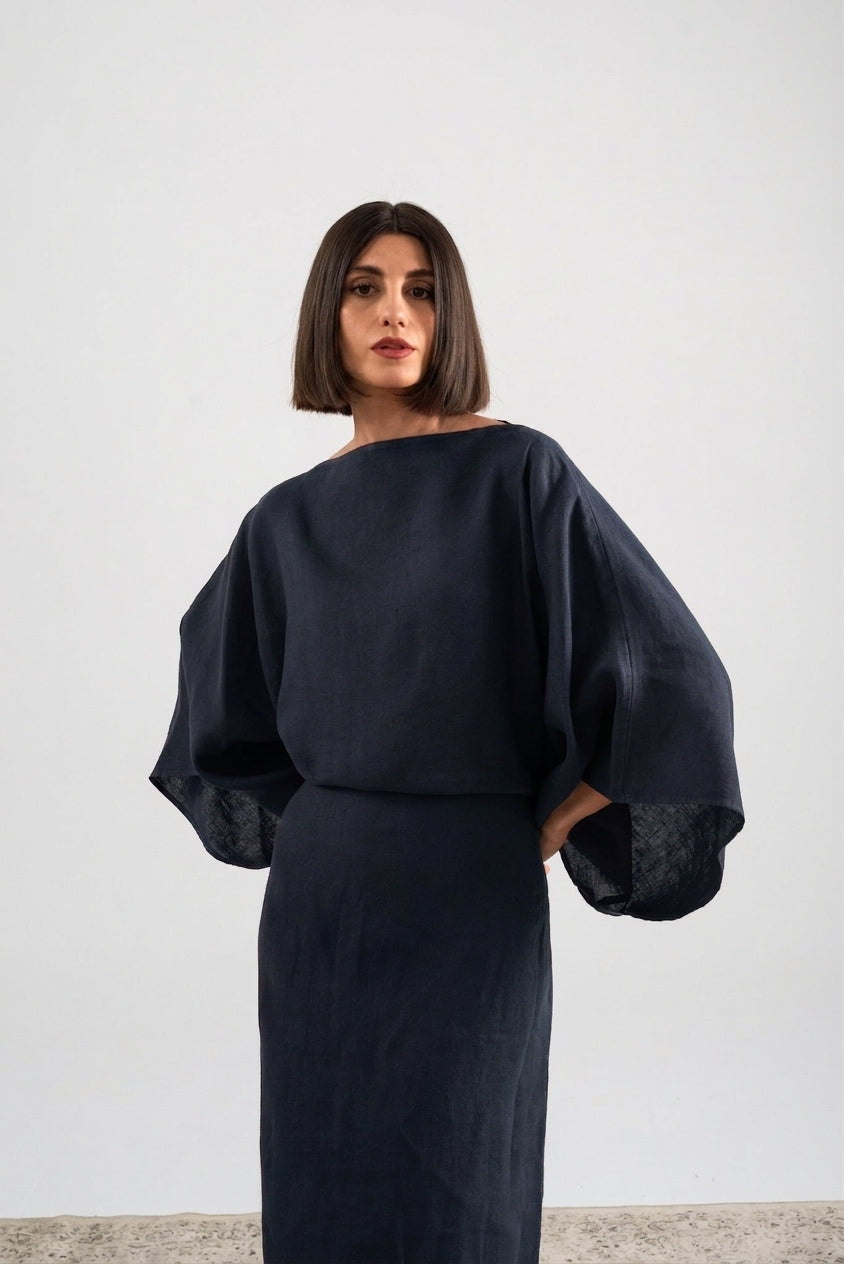
Navy, black, espresso and antique moss: deeper tones are genuinely more forgiving of creasing because shadows fall differently on textured fabric.
A wrinkled ivory linen shows every fold clearly. The same level of wrinkling on a navy piece barely registers. If you're packing for a trip and wrinkle anxiety is real, darker colourways are a practical choice.
Bohemian and softly draped styles.
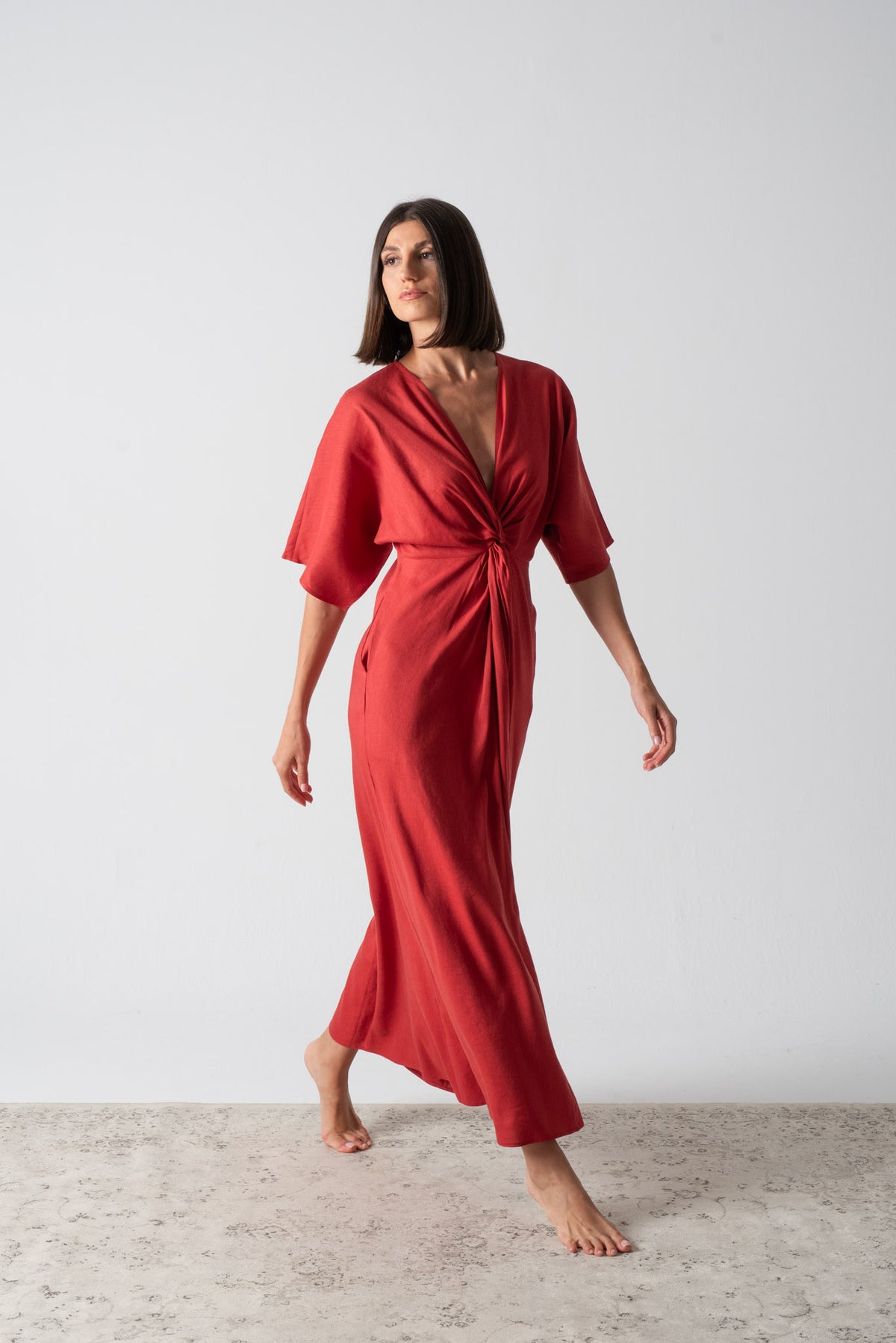
Pieces with natural movement and a free-spirited cut, like the Agapi Maxi Dress or the softly draped Amara Wrap Dress, are designed to look lived-in.
The slight irregularity of a natural crease adds to their character rather than working against it. These are the pieces you pull on after a long travel day and immediately look like you planned it this way.
Relaxed fits generally.
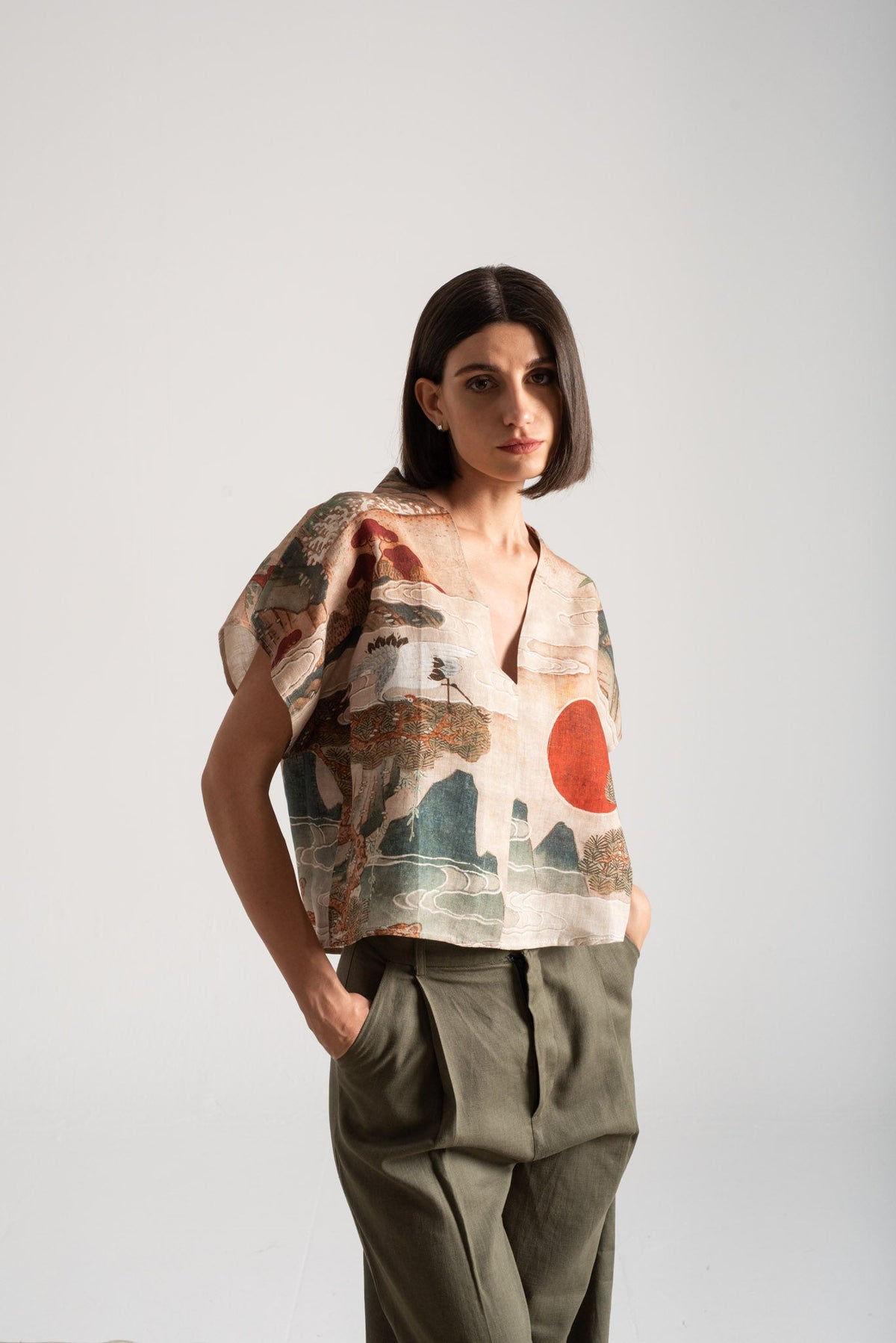
Any piece with ease built into the cut, generous proportions, flowing hemlines, soft waistbands, handles wrinkling gracefully. This includes linen tops with a relaxed, oversized cut — worn loose, any light creasing just adds to the lived-in feel.
The fabric has room to fall and settle. The wrinkle becomes texture, not mess.
When to Reach for the Steamer
Structured pieces.
A tailored trouser, a fitted blazer, a piece with defined seams and clean lines relies on those lines staying clean.
When a structured garment creases, it reads as unkempt rather than relaxed, because the whole point of the silhouette is precision. These are the pieces worth steaming properly before wear.
Button-down shirts you're expecting to look polished in.
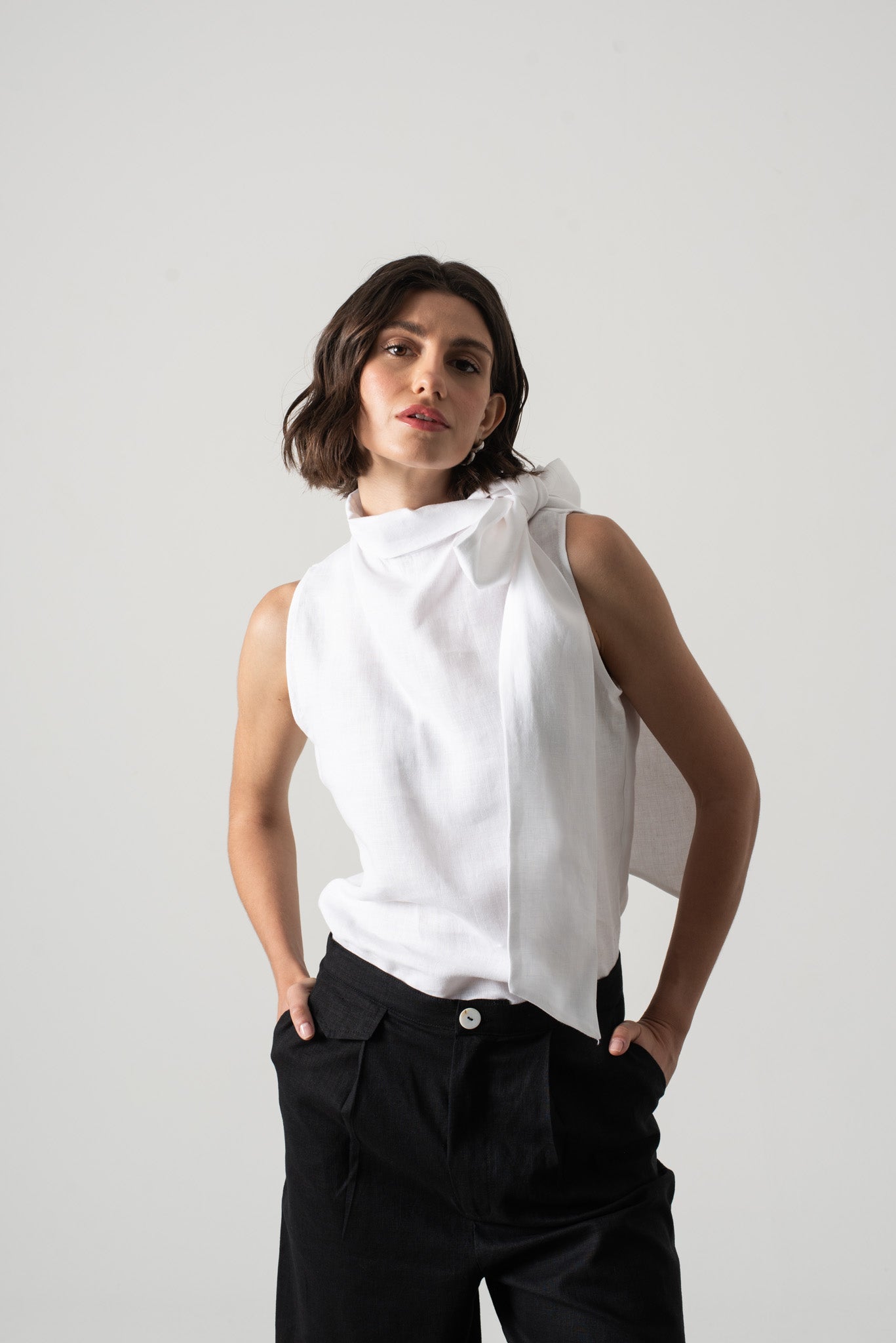
A linen shirt worn open and loose over a swimsuit? Wrinkles are fine, even good. The same shirt tucked into tailored trousers for a client meeting? Iron it.
The context changes everything. A crisp linen shirt signals that you made an effort. A creased one signals that you didn't think about it. Two very different impressions depending on where you're going.
Anything with visible creasing around the bust or shoulders.
Deep, angular creases in high-visibility areas, across the chest, at the shoulders, down the front placket of a shirt, tend to look unintentional regardless of silhouette.
These are worth addressing with a quick steam even on otherwise relaxed pieces.
The short version: fluid beats structured for wrinkle forgiveness, dark beats light, and relaxed fit beats tailored.
Build your travel wardrobe around those principles and you'll spend a lot less time worrying about what came out of your suitcase.
For more on how linen changes with wear and washing, read our guide on does linen soften over time. The same quality that makes it wrinkle is what makes it get better with every wash.
What We're Reading This Holiday
You've unpacked, you've hung everything correctly, your linen is draping beautifully, and now you need something to do with your hands that isn't scrolling. Here are three books worth packing alongside the linen.
The Glassmaker by Tracy Chevalier. Murano, Venice, 1486. A young woman, a secret craft, and an island that has made the world's most beautiful glass for five hundred years. Atmospheric, quietly beautiful, and the kind of book that makes you want to book a flight to Venice the moment you finish it.
Villa Coco by Andrew Sean Greer. A crumbling Tuscan villa, an eccentric elderly Baronessa, and a summer full of unexplained tasks and complicated guests. Witty, sun-drenched, and best read somewhere with decent olive oil nearby.
The Shampoo Effect by Jenny Jackson. The one that's genuinely on every sun lounger right now. A tight-knit beach town, years of tangled history, and the one you'll finish in two sittings and immediately recommend to someone else.

Conclusion: Does Linen Wrinkle?
Yes. Beautifully, naturally, and as a direct consequence of being made from a real plant fibre rather than a plastic one. Here's the quick version of everything above:
- Linen wrinkles because flax fibres are rigid and inelastic. Once they crease, they hold the crease until moisture and heat help them reset. It's chemistry, not poor quality.
- Prevent wrinkles at the washing stage. Lukewarm water, gentle cycle, no wringing, removed immediately, air dried slightly damp on a hanger. This is where most wrinkle problems start and end. See our full linen washing guide for the detail.
- Pack by rolling, not folding. Use packing cubes, tissue paper between layers, and don't overpack the case. Unpack and hang immediately on arrival.
- To remove wrinkles: a travel steamer is the best investment, a water spritz and smooth works for light creases, and a damp towel in the dryer handles the rest. Our ironing guide covers the full technique if you want a crisper finish.
- Fluid, dark, and relaxed beats structured, light, and tailored when it comes to wrinkle forgiveness. Our linen dresses and linen pants are designed to drape beautifully whether pressed or not. Because that's what real linen does.
A Question From Us
Do you obsessively steam your linen outfits 5 minutes before you're out the door? Or do you love the fact linen gives you an excuse to put away the iron? We'd love to know, and if you've got a wrinkle tip that actually works, please share your secrets. Drop it in the comments or write to us at hello@luxmii.com. We read everything, let's call it curiosity not nosiness.